AI will flood the market with polished dashboards, animated landing pages, and clean slideware. That part is solved. You can watch it happen in real time. A prompt, a model, 30 seconds, and you have something that would have taken a senior designer 3 days in 2019.
It looks finished. It says nothing.
// Rive community ethosThe initial leap, the framing, the way they see interaction differently, that does not come from automation.
I am bullish on human design. Communities like Rive sit at the front of this conversation for a reason. They prove the point before the argument even starts.
If you do not know the tool, Rive is an interactive motion design platform built around a state machine. Designers create graphics that respond to input, change state, and carry behavior rather than just playing back linear video. The community uploads files that other people remix, study, and rebuild. It functions less like a portfolio site and more like a living library of how interaction can work.
In March 2025, Duolingo shipped an AI-powered video call feature where their character Lily responds in real time. The motion is built in Rive. The lip sync, the micro-expressions, the state machine that decides whether she is bored or skeptical. That is not a generated asset. That is authored intent. You could automate parts of what that community produces after the fact. Replication is easy once something exists. But the initial leap, the framing, the way they see interaction differently, that does not come from automation. It comes from perspective. You need to witness it before you can even attempt to copy it.
The Template Trap
About 2/3 of what gets produced will be cookie cutter output. Clean, fast, forgettable. Users will burn through it the same way they did with template websites in 2012. Novelty first, boredom right after. Long term, human UX does not lose here. It resets the bar.
Squarespace launched in 2004. Wix in 2006. By 2012, every small business had a template website. They all looked professional. They all looked the same. The designers who survived were the ones who could not be templated.
Design is drifting into the same space product management has lived in for years. Direction matters more than execution. Prompts are just poorly written requirements in a new costume. If you cannot aim them, they wander. Wide outputs. No cohesion. No intent. You get something that looks finished but says nothing.
Control is the difference. Always has been.
What Control Actually Looks Like
When you know how to take a model by the reins and force it through your existing taste, your constraints, your mental model of the problem, it amplifies you. When you do not, it replaces you with noise.
The Rive team understands this at a structural level. Their state machine is not a feature. It is a philosophy. Graphics are no longer linear playback. They are conditional. They respond. They carry behavior, not just motion. In August 2025, BMW i Ventures invested in the company. Not because they needed prettier dashboards. Because they saw that the boundary between design and engineering is collapsing, and the teams that control that boundary will own the next decade of interface.
Control is not typing a better prompt. It is knowing what question you are asking, why it matters, and how the answer should behave. Without that, you are just generating shapes.
Hernan Torrisi built Bodymovin in 2015 and gave the world Lottie. In 2023, he joined Rive. That is not a lateral move. It is a bet on control. On stateful graphics. On designers who write behavior, not just deliver assets.
The Split
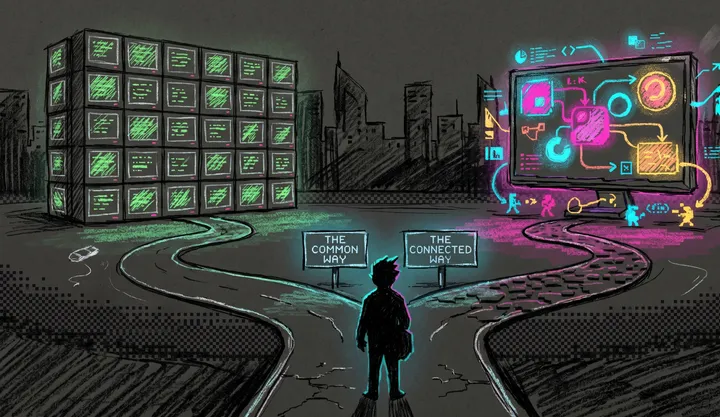
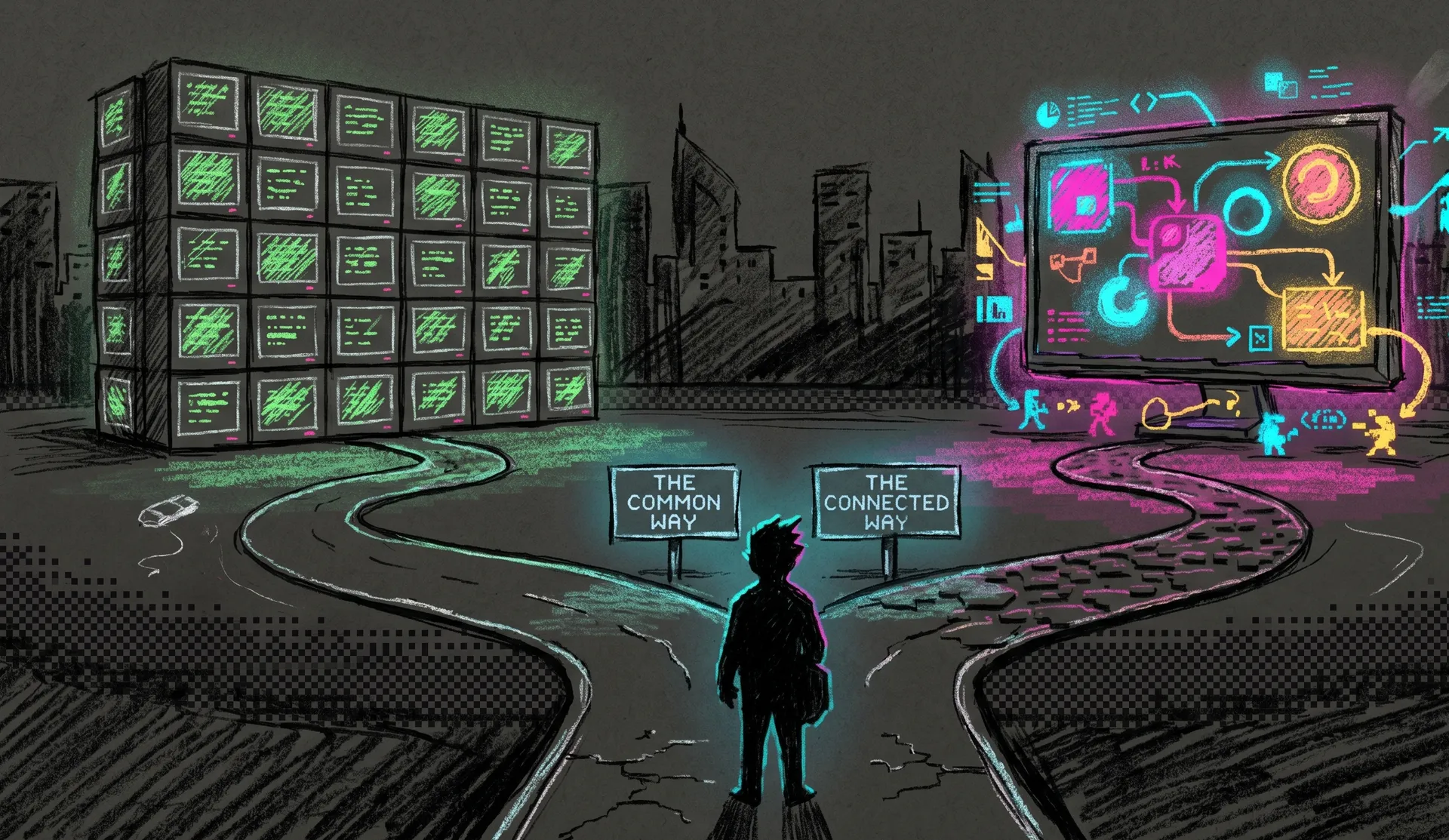
You can already see the split happening. One class of designer will prompt their way to mediocrity. The other will use the same models as raw material and force them through a framework of taste and intent. The first group will produce work that looks impressive for 15 minutes. The second group will produce work that survives contact with a real user.
The tool got faster. The thinking did not.
The constraint shifts upstream. You still need to know what question you are asking, why it matters, and how the answer should behave. The models will get better at execution. They will not get better at knowing what you meant.
// SENSOR_DATA_OVERLAY: FIELD_INTENSITY 0.92Hz
// "The design isn't just a shell; it's a sensory interface for the model's weights."